
·4 min read
From West Bengal to Kuwait: A Journey Delayed, Not Derailed
For Anjeep Thapa, the journey to Kuwait was supposed to mark a new beginning. He had built his experience, taken up opportunities in different parts of India and gone through the recruitment process.…
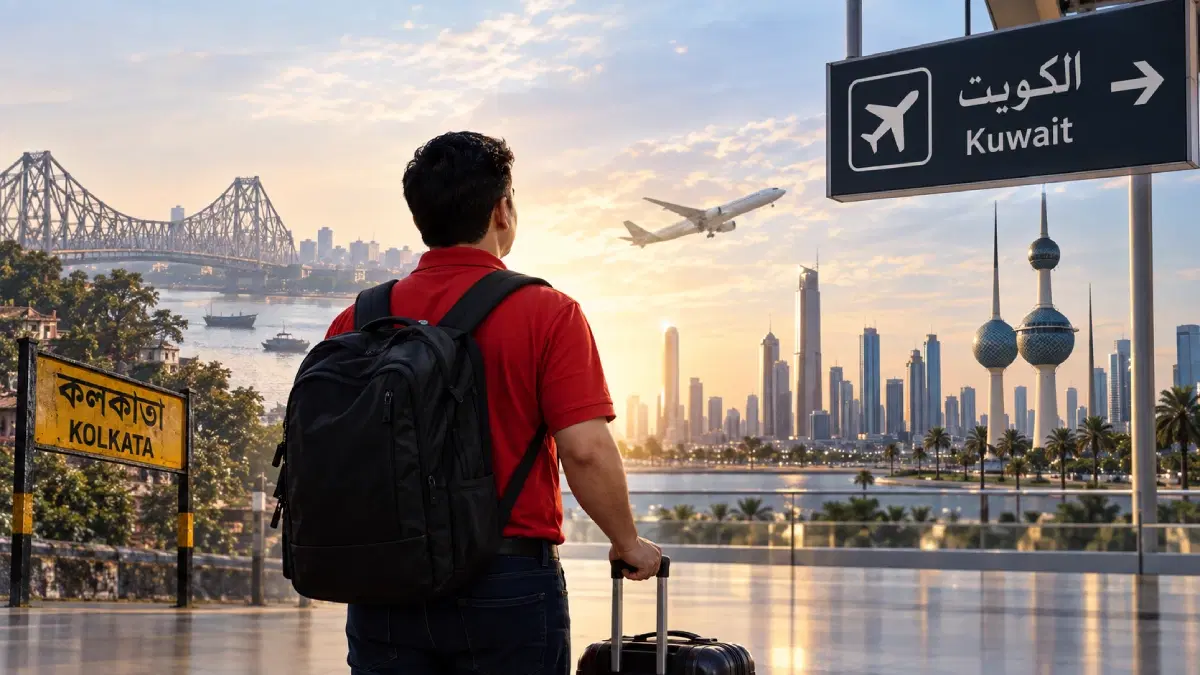
For Anjeep Thapa, the journey to Kuwait was supposed to mark a new beginning. He had built his experience, taken up opportunities in different parts of India and gone through the recruitment process. By November 2025, everything seemed to be falling into place. Through 2COMS, Anjeep was selected for a sales position in Kuwait, with his departure initially planned for January.
Then, the situation in the region changed.
As conflict and instability affected the Gulf, his travel plans were disrupted. The journey he had been preparing for suddenly had to be put on hold. His selection remained, but the timeline changed. What was supposed to be the next step in his career became a period of waiting and uncertainty.
For someone preparing to leave home and begin working in another country, a delay like this can be difficult. Plans that once seemed certain suddenly become unclear. Travel dates change, arrangements have to be reconsidered and there is always the question of when the opportunity will finally become possible.
Anjeep, however, stayed with the process. He waited for the situation to stabilise. When travel became possible again, he finally made his way to Kuwait and began the job he had been selected for months earlier.
A journey that began in India
Anjeep's journey to Kuwait was not the beginning of his working life. It was the result of several years of experience across different places and sectors in India.
Originally from West Bengal, Anjeep completed his BA Honours degree before entering the workforce. His career took him through different kinds of work, including the Merchant Navy, before he moved into sales. He worked in Kerala and Delhi, gaining experience in customer-facing roles and learning to adapt to different workplaces and environments.
Moving from one city to another meant constantly adjusting to new people, new responsibilities and new surroundings. Over time, those experiences became part of the professional foundation he carried with him when he eventually decided to work abroad.
Starting again in Kuwait

Today, Anjeep works as a salesman at Grand Hyper in Kuwait. His role is centred around customers, communication and sales. Much of his working day involves assisting customers and managing sales, making communication an essential part of his everyday work.
Working in a new country also meant adapting to a different social and linguistic environment. Anjeep is familiar with English and Arabic, while Hindi and English are particularly useful in his everyday interactions outside the workplace.
He did not undergo formal language training before travelling to Kuwait. Instead, much of his adaptation happened through everyday experience. Conversations with customers, interactions with colleagues and simply navigating life in a new country helped him become more comfortable with his surroundings.
For Anjeep, settling into Kuwait was therefore not just about starting a new job. It was also about learning how to function confidently in an unfamiliar environment.
The support behind the move
One of the things that has made the transition easier is the practical support provided by his employer. His accommodation and food are provided by the company, while transportation and workplace facilities are also part of his employment.
For someone moving thousands of kilometres away from home, these details matter. Having accommodation and food covered reduces some of the immediate financial pressure of starting life in another country. It also gives a new worker some stability while they adjust to their surroundings and settle into their job.

A different earning environment
The move has also changed Anjeep's earning environment. Before leaving India, he was earning around ₹24,000 per month. In Kuwait, he now earns around 110 Kuwaiti dinars per month.
His savings are still modest, but the opportunity has given him something that goes beyond the monthly figure. He is gaining international work experience, working in a different market and learning to navigate a professional environment outside India. With accommodation and food provided by his employer, some of the major costs associated with relocating abroad are also reduced.
More than a journey from one country to another
Indian workers have been moving to the Gulf for decades, making corridors such as India-Kuwait an established part of global labour mobility. But behind every large mobility corridor are individual stories, and those stories rarely follow a perfectly straight path.
Anjeep's did not.
His journey began in West Bengal, continued through education and work, took him to Kerala and Delhi, and eventually led him to Kuwait. There were changes in sectors, changes in cities and an unexpected regional crisis that forced him to delay the international move he had been preparing for.
But the opportunity remained. And when the road opened again, he took it.
Today, the uncertainty surrounding his departure has been replaced by the everyday rhythm of working life in Kuwait. Customers, conversations, sales and another day at work have become part of his new routine.
Perhaps that is what makes his story particularly meaningful. Global mobility is often described through numbers, destinations and labour demand. But for an individual, it is much more personal. It is about making plans, dealing with uncertainty, waiting when circumstances demand it and finding the confidence to start again when the opportunity finally arrives.
Anjeep's journey was delayed, but it was not derailed.
He waited for the opportunity, crossed the distance and started again. The road changed. The destination did not.